
Building Back Bone: What Really Improves Bone Density in Midlife Women
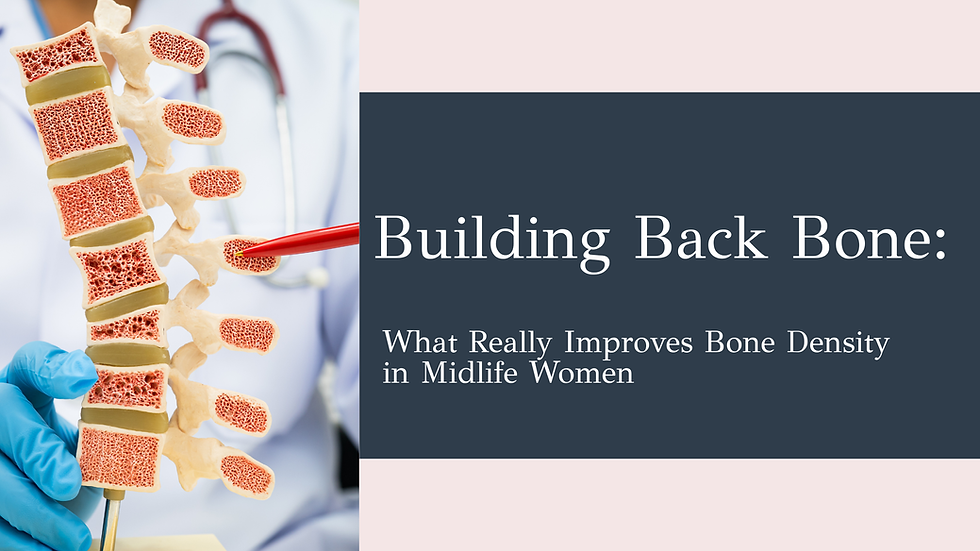
If bone health only comes up at your annual physical, or after a fracture, you’re not alone.
Many women don’t think about bone density until it becomes a problem. But research shows that midlife is actually a powerful window for bone support, not a lost cause.
What matters most isn’t a single supplement or a perfect routine. It’s how bone responds to load, fuel, and consistency over time.
Bone Is Living Tissue, And It Responds to Stress
Bone isn’t static. It constantly remodels in response to mechanical stress. When bone experiences enough load, it adapts by becoming stronger. When it doesn’t, bone loss accelerates, especially during perimenopause and menopause, when estrogen declines.
Human trials suggest that progressive resistance training, not walking alone, is one of the most effective ways to preserve or improve bone mineral density (BMD) in women.
In randomized controlled trials, postmenopausal women who performed high-intensity resistance or impact-based training maintained or increased BMD at the hip and spine compared to controls, without increased injury risk when properly supervised. This matters, because those sites are where fractures are most dangerous.
Why Walking Isn’t Enough (But Still Counts)
Walking has many benefits, cardiovascular health, blood sugar regulation, mental well-being, but from a bone perspective, it provides minimal osteogenic stimulus. Bone adapts to novel and sufficiently strong forces. Once walking becomes routine, it no longer challenges bone tissue enough to signal growth.
This doesn’t mean walking is “bad.” It means that bone health requires variety and load, such as:
Resistance training
Carrying weight
Jumping or impact (when appropriate)
Progressive overload over time
We see this often with clients who walk daily but still experience declining bone density.
Nutrition Matters, But Not in Isolation
Calcium and vitamin D are important, but supplements alone do not stop bone loss. Bone formation also depends on:
Adequate protein to support bone matrix
Total energy intake (chronic under-eating impairs bone remodeling)
Micronutrients like magnesium and vitamin K
Studies show that protein intake paired with resistance training leads to better bone outcomes than either strategy alone. Bone needs both the signal (load) and the materials (nutrition).
The Takeaway We Share With Clients
Bone health isn’t about doing everything perfectly. It’s about:
Loading your bones in ways that challenge them
Fueling your body enough to adapt
Building habits you can sustain
And the good new is....bone can respond at any age, especially when supported consistently and respectfully.
That’s the approach we take inside Honor Your Body: strength for longevity, nutrition for support, and progress without fear.
👉 Join Honor Your Body or download the app to learn how to build strong bones and support your health for life.


Comments